




Words: NZV8 | Photos: Hugo van Cingel, Supplied
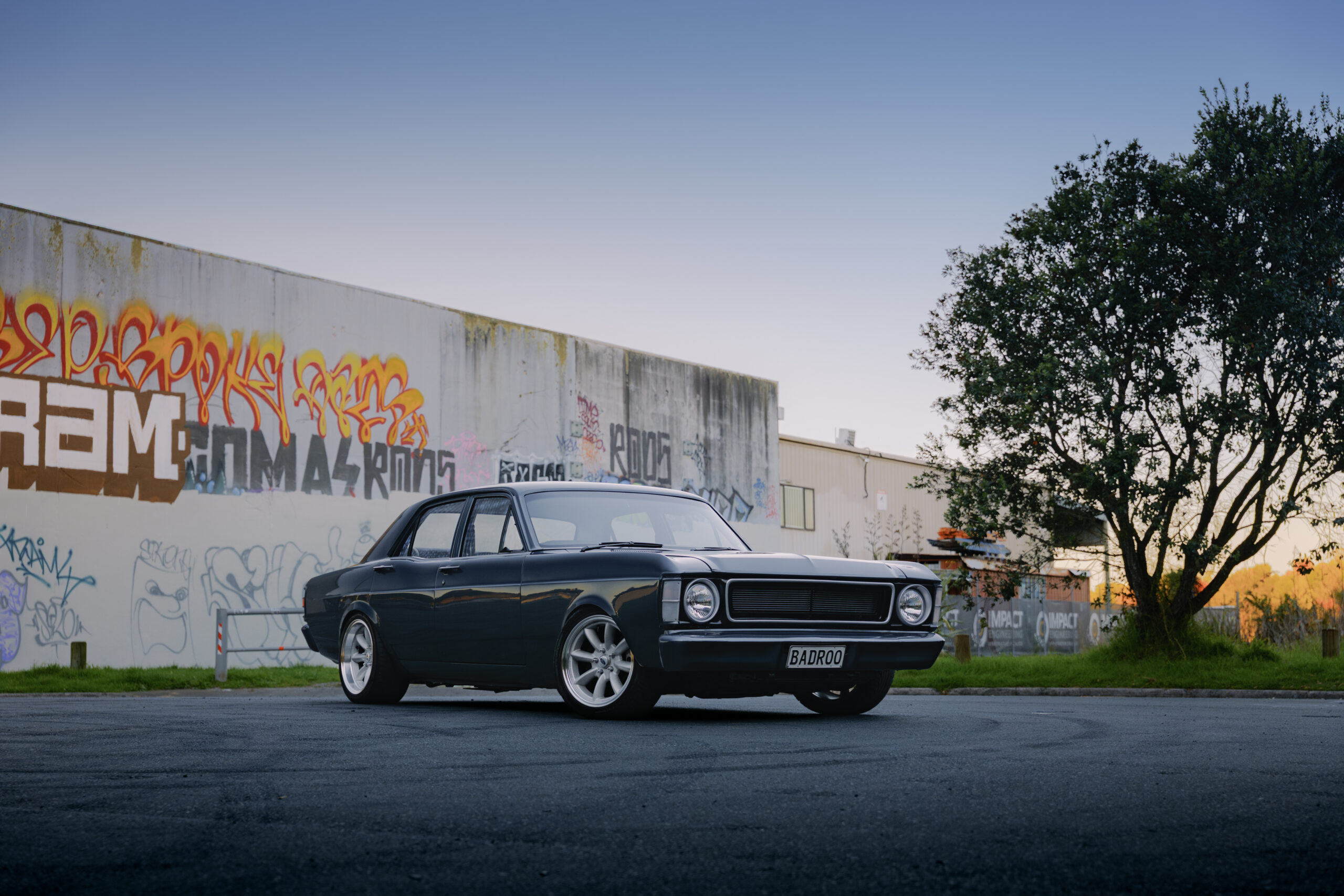
If you’re chronically online like most kids these days, and spend much of it in the V8 space, then you may have heard of a fella by the name of Andy Etchells. If not, he’s the mastermind behind RADROO, a Ford Falcon XY that has been separated from its original chassis and married to modern running gear from an EF. Well, he’s only gone and done it again, only this time with an XW called BADROO, AU underpinnings, and a turbo hidden out of sight for good measure.
While some folks may scoff at the idea, there are many advantages to ripping out the old and replacing it with the new, which Andy learned from his last project. “From previously building the body-swapped XY, it really showed the advantages an old-school car can have,” he explains. “I wanted an XW as well, and the AU independent rear suspension floor pan suited this model and ticked the boxes, as it offered good handling and cruising.” Andy makes it sound easy, but as you can imagine, a project of this magnitude is no simple feat.
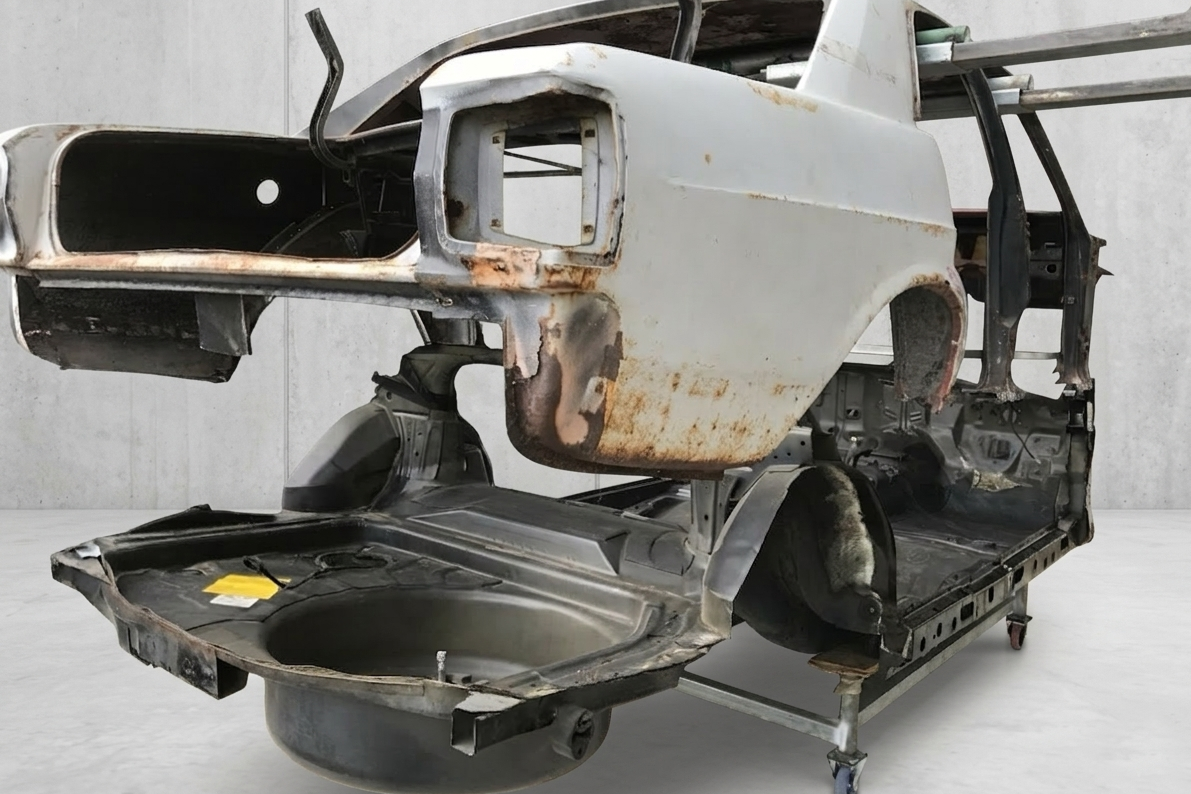
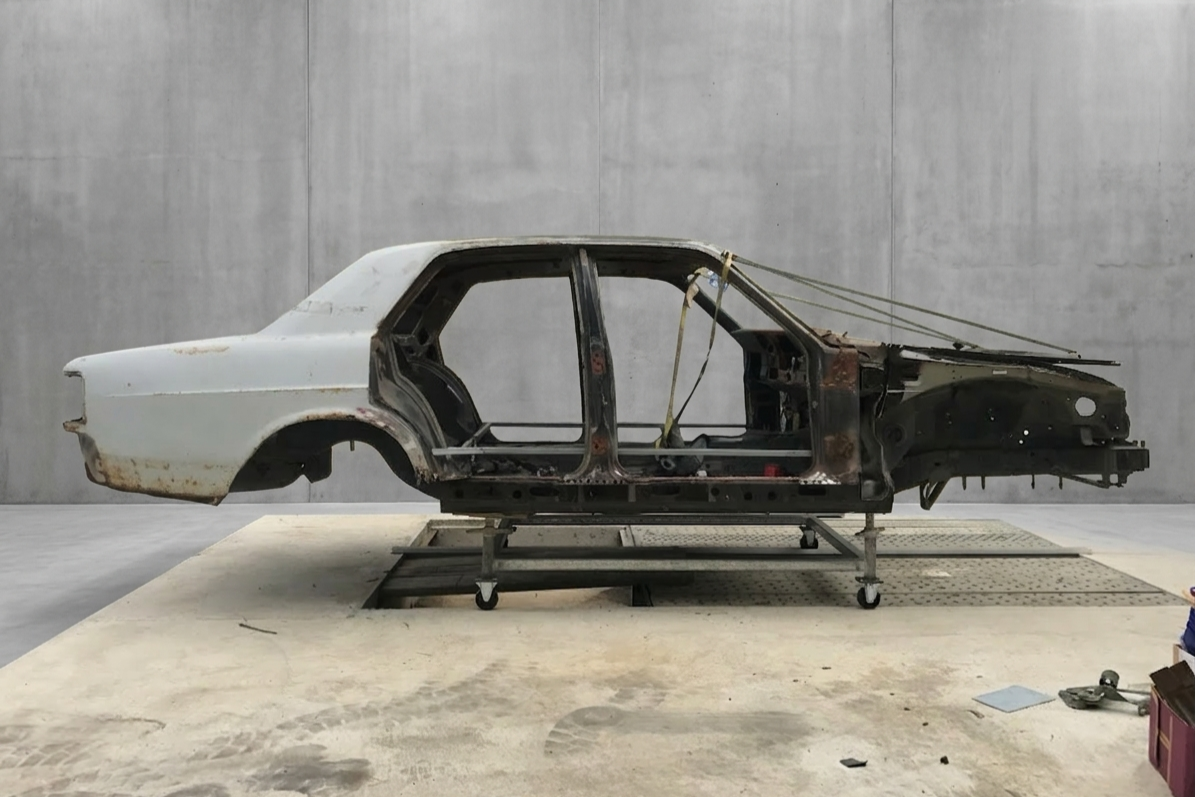
Like any good build, it all started with a mate of a mate. Or in this case, Andy’s colleague Nev, who sourced the car — a New Zealand–new, 1969 model — from a friend’s son. However, like any old Falcon that’s spent all of its life here, the body was riddled with rust, which took up a fair chunk of the five-year build time to address. With that, the shell was stripped back and separated from its floor pan, which was then set aside. The donor car Andy had chosen to build the car around was a 2002 XR8 (AU), and included the floor pan, IRS rear end, suspension, brakes, engine, gearbox, driveshaft, steering column, wiring loom, body control module, seats, carpet, and centre console — the lot. The XR8 donor was, in Andy’s words, comprehensively disassembled and pressed into service.
Surprisingly, grafting the XW body to the AU floor pan was reasonably straightforward once Andy got his head around the geometry, with the A-pillar and firewall being the major junction points. The B-pillar sat straight onto new XW sills, which wrapped around the AU’s, and were spot-welded to the seam beneath. The C-pillar was joined at the sill and around the inner wheel tubs. While the body was off, a section of the left-hand sill was opened up to route a boost pipe, running inside the sill using existing holes, down through the stiffeners, and up to the front guard. We’ll come back to that later, as there’s a bit of wizardry going on there.
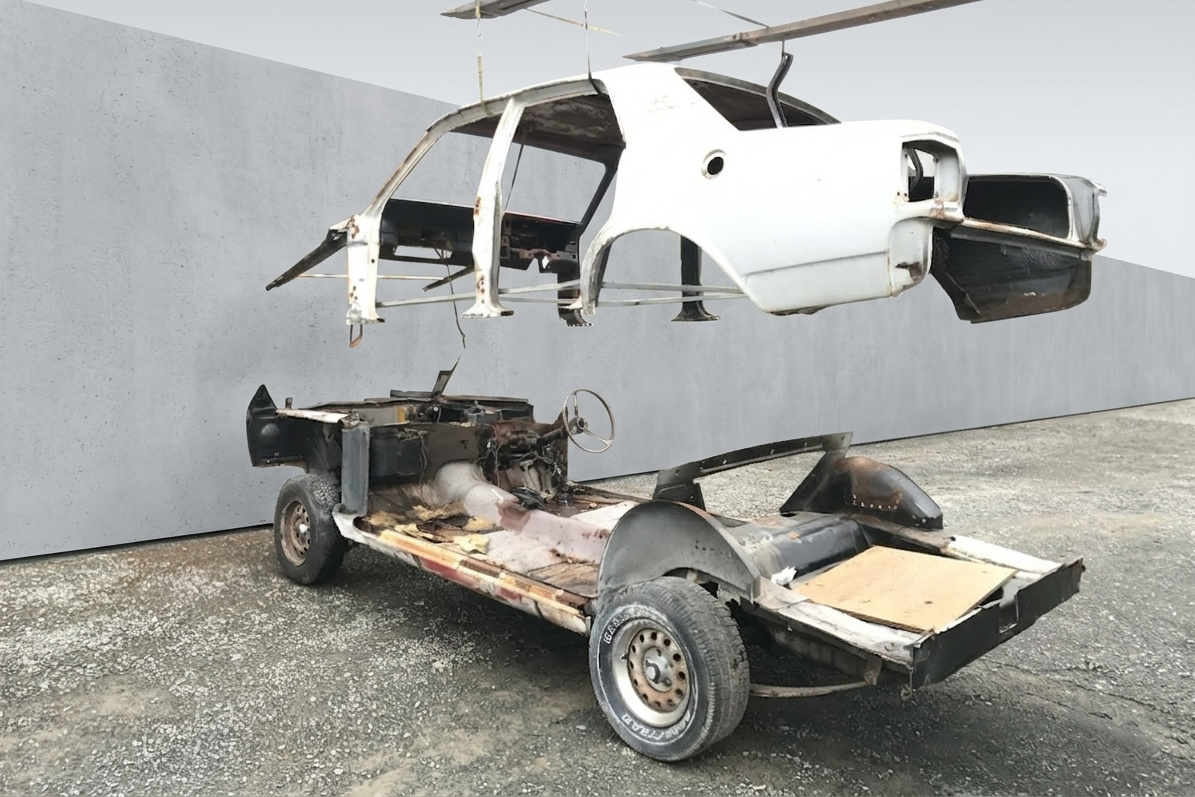
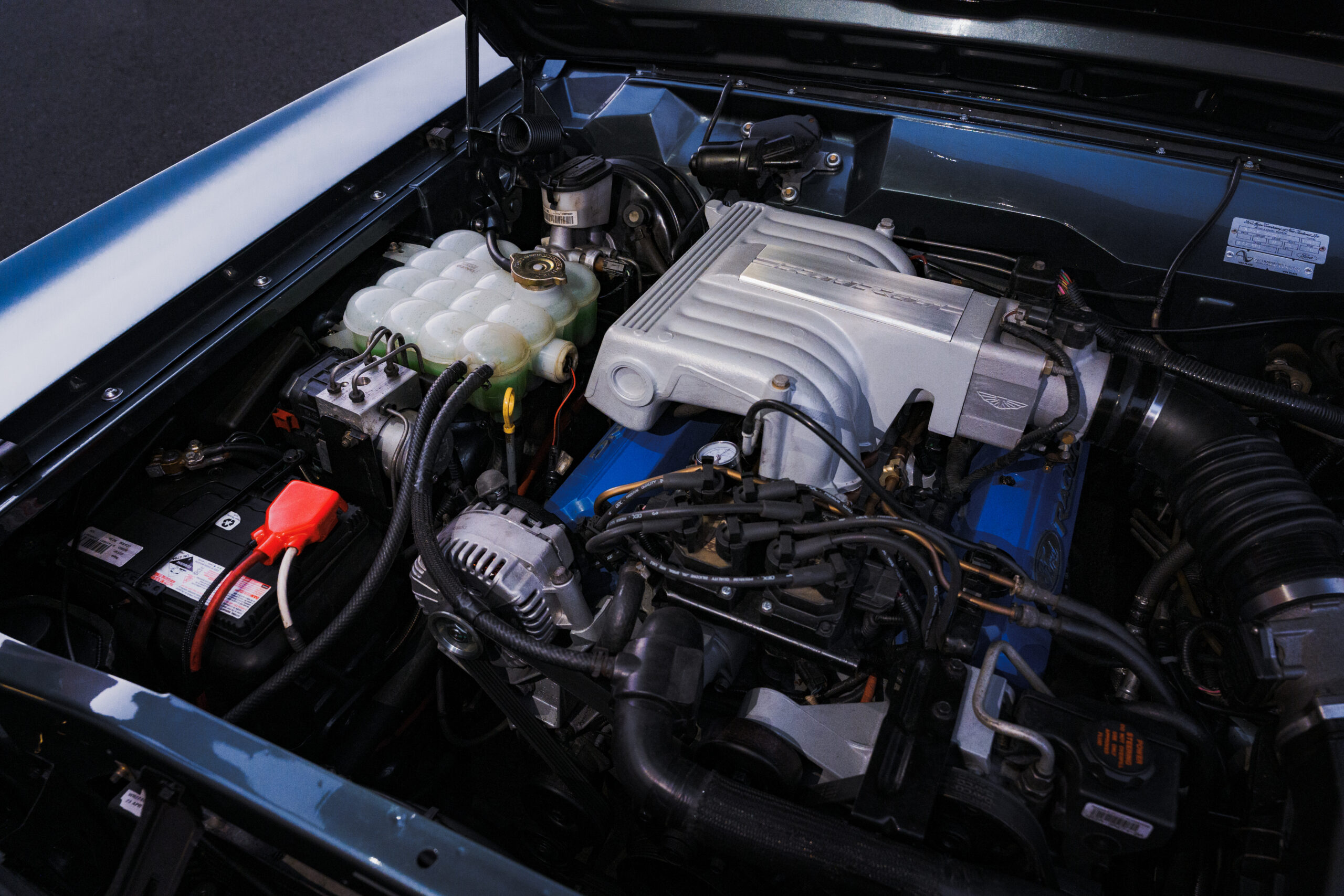
When it came to the engine bay, the AU firewall came right up to the XW’s wiper panel plenum, so some massaging was needed to ensure it fit. The XW radiator support panel was modified slightly to attach to the AU chassis rails, with the new guard supports running back to the plenum and supporting the bonnet hinges, still allowing room for the ABS module, radiator reservoir, battery, and fusebox. Other than the obvious repackaging of accessories around the bay, you’d be forgiven for thinking that the motor has been left as it came from Ford, which is Andy’s intention. However, you’d be wrong.
Sitting just north of the rear differential underneath the car is a Garrett T4 turbo producing 5psi of boost, sourced from a 540ci six-cylinder Lycoming engine that you’ll find strapped to the likes of a Cessna. To hide any indication that this thing is boosted, the XR8’s factory airbox has been cleverly repurposed to disguise the charge pipe running up from under the right front guard, as well as the blow-off valve, air temp, and boost sensors. Andy even hid the alloy intake pipe in the original rubber unit to fool us even further. To keep the intake air cool, a water-to-air heat exchanger lives in the guard, which is chilled via the air-conditioning system. Running a rear-mounted turbo brought the challenge of keeping it lubricated, with the return oil being pushed along by a scavenge pump, while the oil feed is plumbed in via an alloy tube. Engine management is handled by a Link G4 piggy-backed off the factory ECU, with the standard AU XR8 fuel system retained alongside a new pump and 440cc injectors. The exhaust exits through Pacemaker Tri-Y headers into twin two-and-a-quarter-inch pipes that merge to three-inch oval over the driveshaft, then continue as three-inch from the turbo to the back.
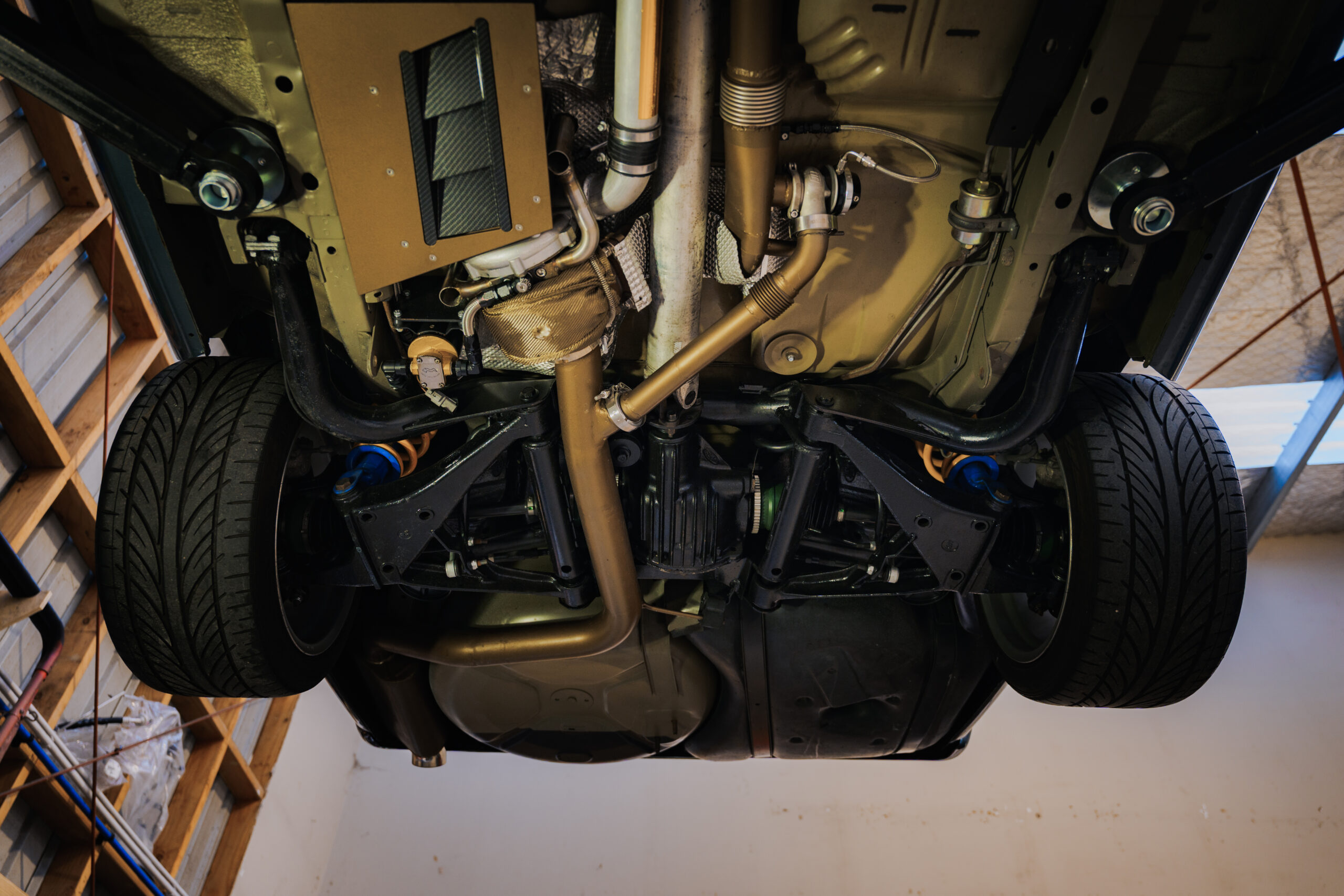
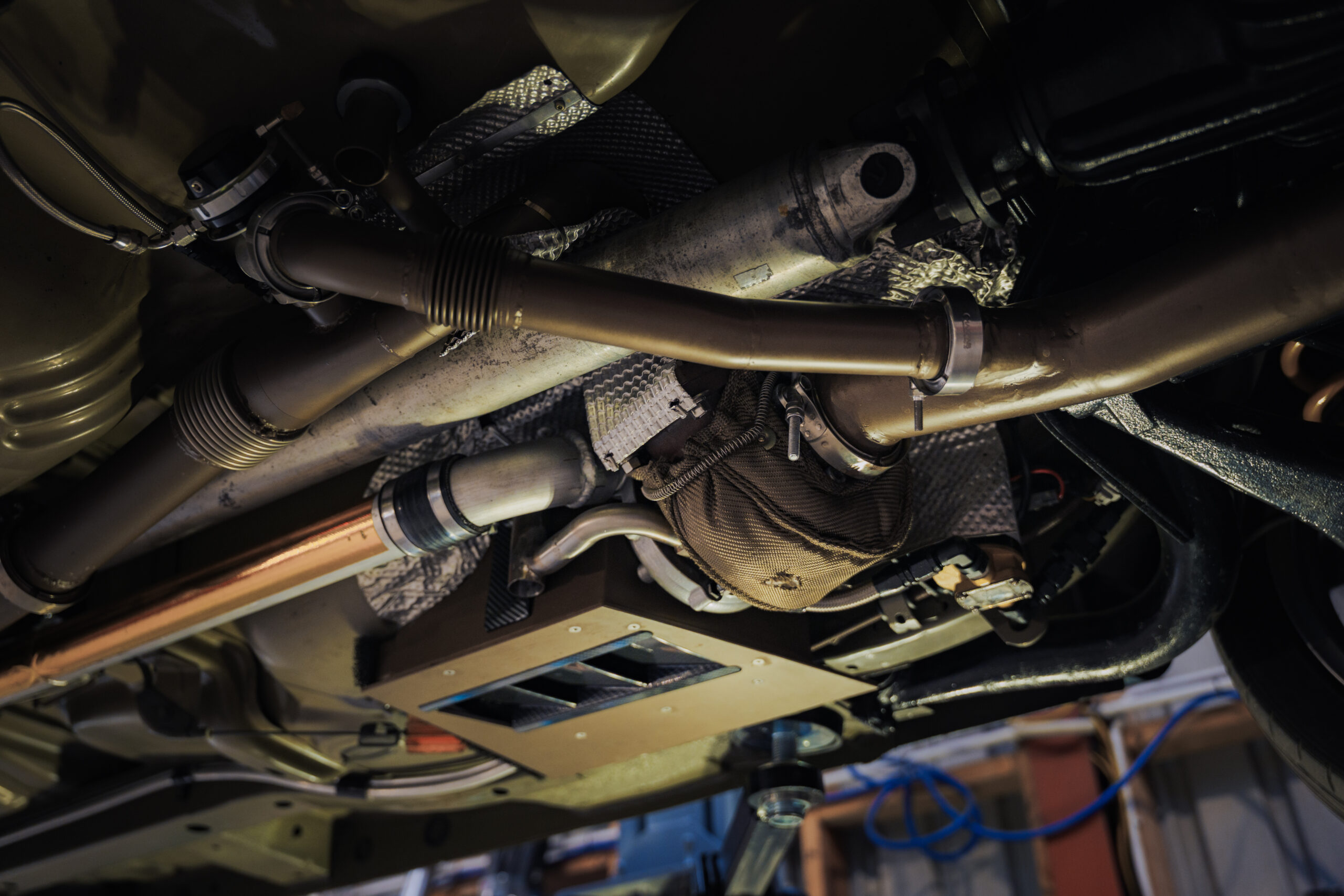
Before the turbo was in the picture, the Windsor was already pulling its weight. When Andy first dynoed the donor car, it registered 220kW at the wheels — which matched the factory specification, except the previous owner had hinted there might be a different cam fitted. With the added turbo, that figure has climbed to 320kW at the wheels, which Andy translates to around 500hp at the engine. As for the gearbox, the original T5 five-speed manual has been retained, and is momentarily relieved of any punishment by a Clutch Industries heavy-duty clutch between gear changes, backed up by a stock XR8 driveshaft and IRS diff.
The suspension is entirely XR8, including the front struts and independent rear, but has been enhanced with King Springs Super Low springs rated for the setup. It’s a similar story with the brakes, with the front rotors and Tickford callipers kept from the XR8 option pack. As for the wheels, Andy opted for a set of Transam Race Engineering Superlite alloys, measuring 17×8 inches wrapped in 235/35R17 tyres up front, and 17×9.5 inches with 255/35R17s at the back.
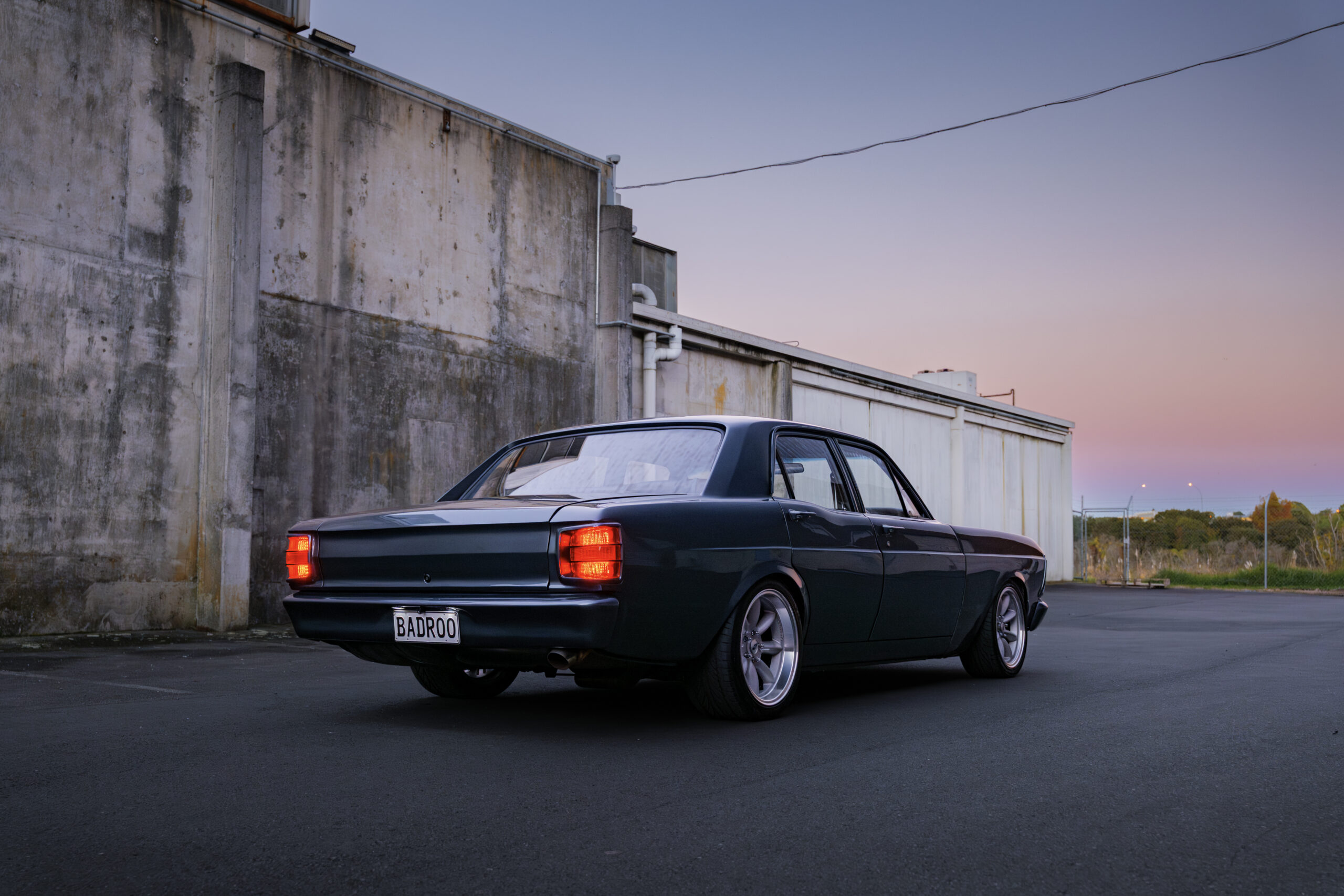
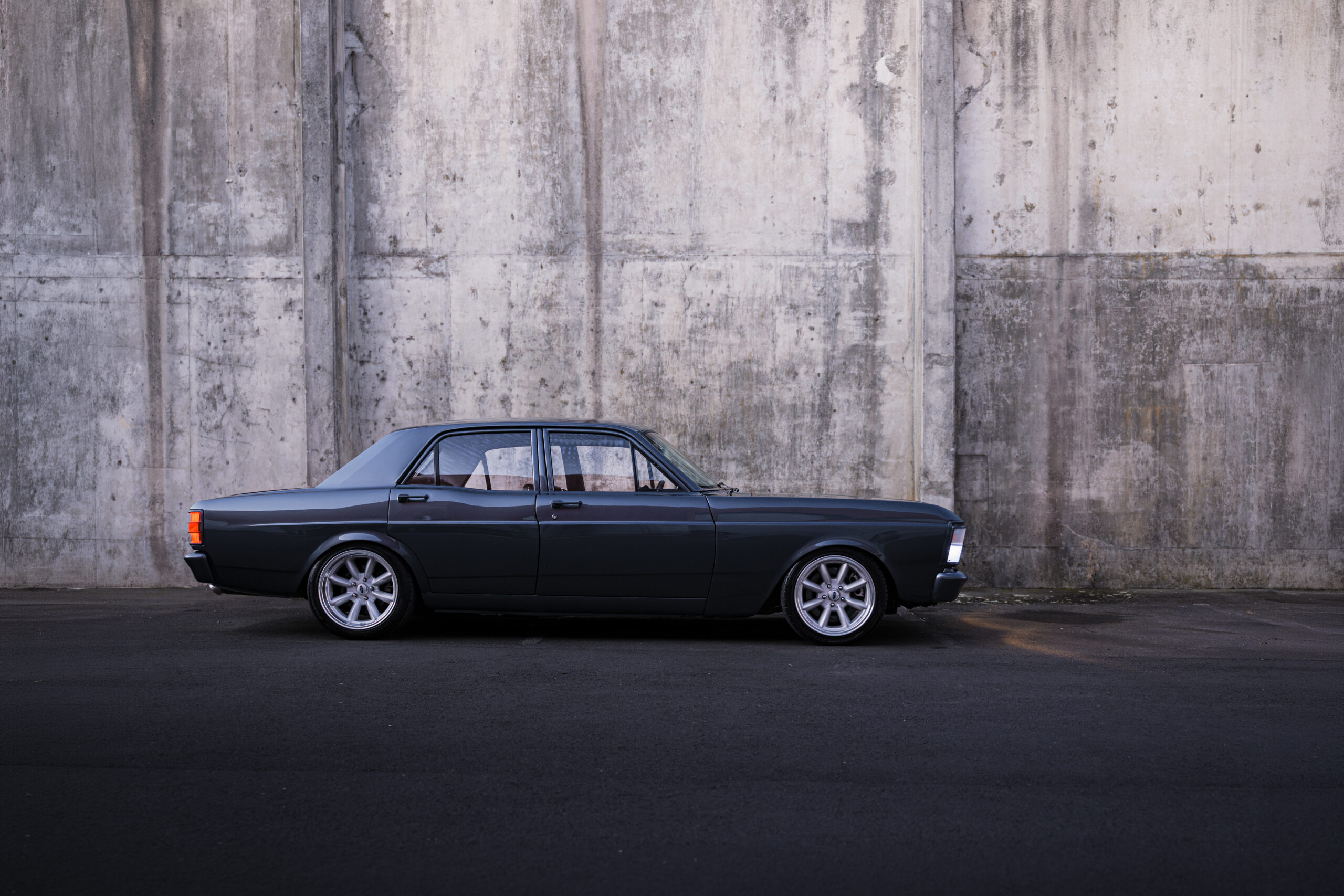
Elite Paintworks in Te Aroha took care of the paintwork, a grey metallic finish from Audi’s colour range that suits the XW to a T. The standard steel front and rear bumpers were swapped out for fibreglass alternatives, which were shortened to hug the body more closely, followed by the integration of a reversing camera neatly above the rear number plate.
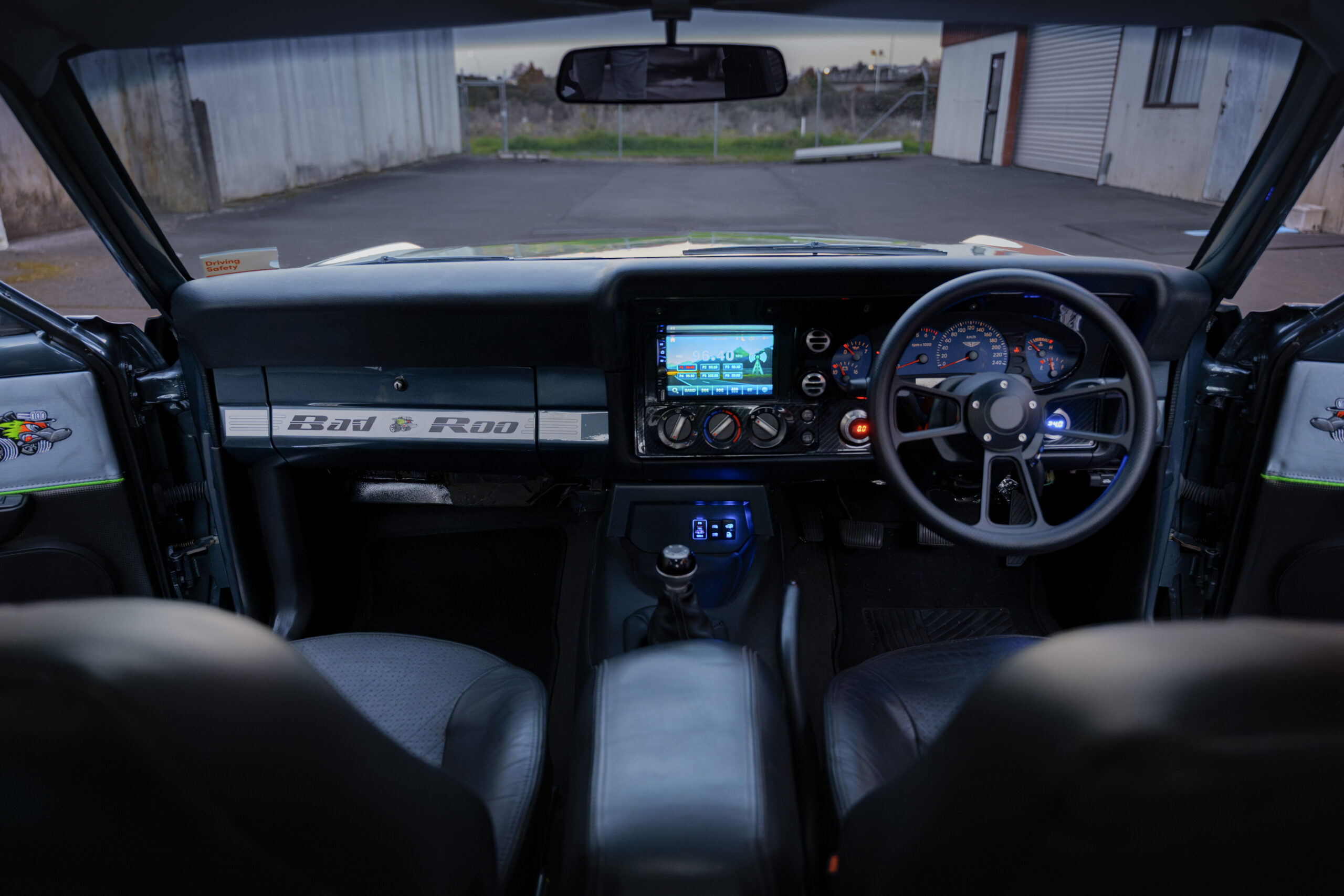
Inside, the AU XR8 interior does what it was always intended to — provide a comfortable, modern environment, but in a shell that looks like it belongs in 1969. The XR8 seats, fold-down rear seats, centre console, carpet, climate controls, and electric windows are all as you’d find in a stock AU. The XW dash surround is fibreglass and has been hydro-dipped in a carbon-fibre pattern, fitted with the XR8 instrument cluster and climate controls. The air vents are machined from billet alloy, along with the round billet knobs fitted on either side of the steering column — the latter housing a digital display showing intake temperature and boost. The driver’s touch points include a steering wheel from Forever Sharp and a standard XR8 gear shifter. While much of the interior is AU, the door cards are modified XW versions, which have been embroidered with ‘BADROO’ to complement the earlier XY build, along with the bike-crank armrests. The audio system consists of a double-DIN head unit, pumping sound through the factory AU premium sound system.
Since completing the build, Andy has been out enjoying what is probably the best-handling XW in the country, if not the world, thanks to its newfound modern underpinnings. “It’s an XW Falcon that goes good, handles, and cruises in comfort like a late-model car,” he says. It’s a concept he first proved with RADROO and has now refined with BADROO, inspiring a growing number of builders to give the idea a go with other chassis, including the XR, XT, XY, and XB. So, what’s next for Andy? He tells us he hasn’t stopped yet, with the next build being an XB coupe body on an FGX XR8 chassis. We’re looking forward to that one!
OWNER Q&A
DRIVER: Andy Etchells
AGE: 59
OCCUPATION: Previously ran a parts business, now doing project management
PREVIOUSLY OWNED CARS: V8 Cortinas, V8 supercharged Transits, and 30+ Falcons from XM to FGX
DREAM CAR: XB Falcon Coupe on an FGX XR8 chassis
WHY THIS CAR? Body-swapped an XY first and wanted an XW as well
BUILD TIME: Five years, on and off
LENGTH OF OWNERSHIP: Seven years
THIS CAR’S HISTORY: NZ-new
ANDY THANKS: Wife Kelly and sons Steve and Matt, COGS (cogs.co.nz) in Tauranga for machine work and all the hard-to-do small components and machining, Alpine Auto Air in Tauranga for heaps of help and work
FOLLOW ANDY ON INSTAGRAM: @falcon_innovations_nz
SPEC LIST
VEHICLE: 1969 Ford Falcon (XW)
ENGINE: Ford Windsor 5.0L V8, standard internals, standard cylinder heads, Link G4 engine management piggy-backed off factory ECU, T4 Garrett rear-mount turbo (rebuilt from aircraft Lycoming 540ci unit), alloy tube inlet inside rubber intake for boost, 440cc injectors, standard AU XR8 fuel system with new pump, Pacemaker Tri-Y headers, twin two-and-a-quarter-inch into three-inch oval over driveshaft, three-inch from turbo to rear, water-to-air intercooler in guard chilled via air-con heat exchanger, standard AU XR8 cooling, oil cooler, standard AU XR8 ignition
DRIVELINE: AU XR8 T5 five-speed manual gearbox, Clutch Industries heavy-duty clutch, AU XR8 driveshaft, AU XR8 IRS diff and axles
SUSPENSION: All AU Falcon XR8; front AU Falcon XR8 struts, rear standard AU IRS, AU XR8 shocks, King Springs Super Low for AU Falcon application
BRAKES: AU Falcon pedal and booster, front XR8 discs with Tickford callipers, rear AU Falcon discs and callipers
WHEELS/TYRES: Transam Race Engineering Superlite alloys, front 17×8 inch with 235/35R17, rear 17×9.5 inch with 255/35R17
EXTERIOR: Audi grey metallic, XW body over AU XR8 floor pan, fibreglass bumpers shortened to hug body, reversing camera above number plate
INTERIOR: AU XR8 seats with fold-down rear seats and arm rest, AU Falcon carpet throughout including boot, fibreglass XW dash surround hydro-dipped carbon fibre, billet alloy air vents, billet knobs with digital boost and intake temp display, AU XR8 Tickford instrument cluster, AU climate controls with AC and heat exchanger switching, Forever Sharp steering wheel, AU Series 3 XR8 shifter, embroidered door cards, AU electric windows and central locking, factory AU body control module, double-DIN audio with factory AU premium sound speakers
PERFORMANCE: 320kW at the wheels (approximately 500hp at the engine)
This article originally appeared in NZV8 issue 234