




Words & Photos: Isaac Western
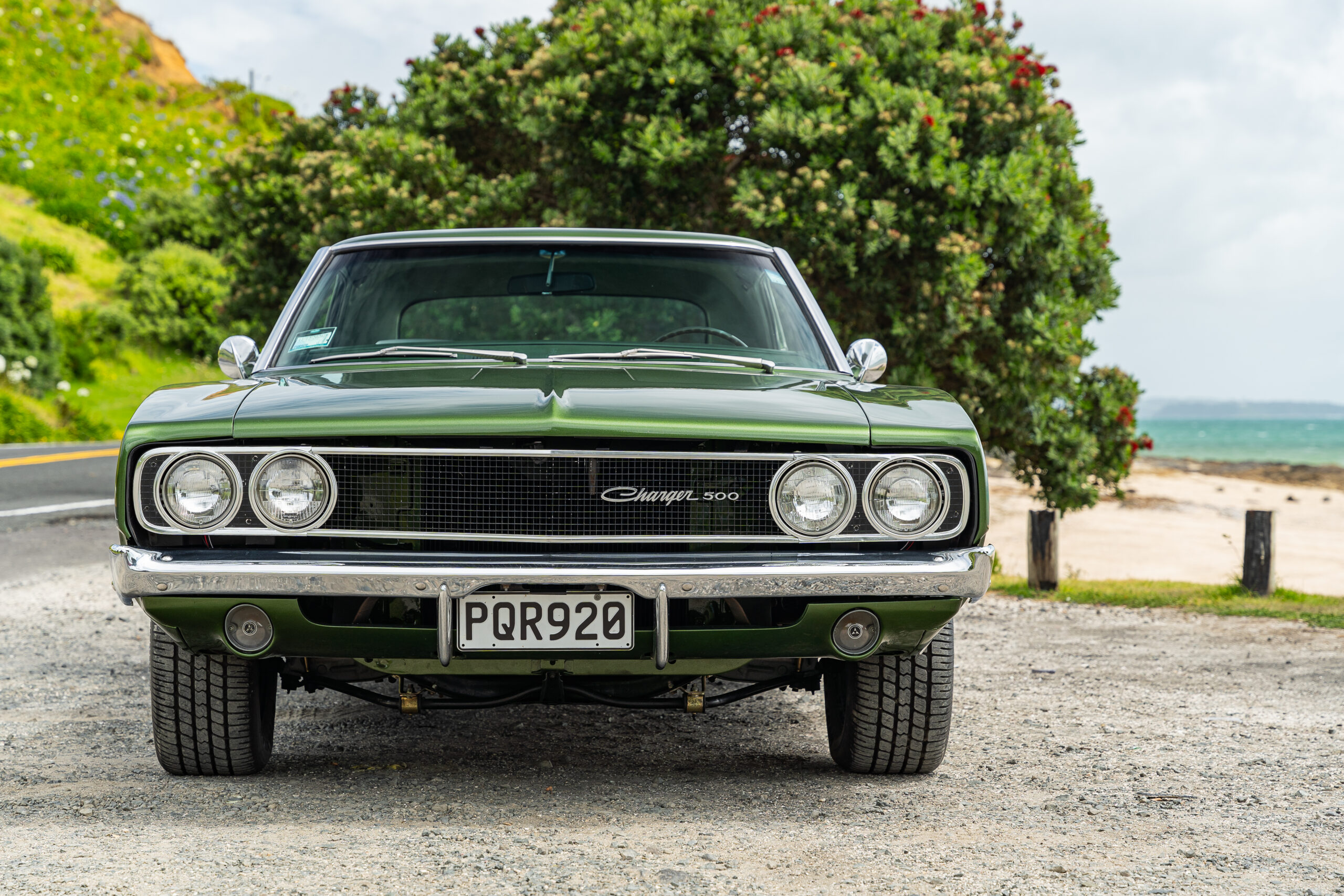
The Ferrari F40, Porsche Carrera GT, and the Mercedes 300SL Gullwing — what do these cars all have in common? They’re all common as muck. Seriously, when you compare them to this Dodge Charger 500, you’d easily find about three F40s for every one of these. So how many were made then? Well, it depends on who you ask … An official Chrysler VIN list from 1972 states that 392 cars exist, with a letter supporting the fact. Although another letter also from Chrysler in 1971 confirms that 548 were built. To make matters worse, a letter from NASCAR founder Bill France Sr confirms that 540 cars were built, and Mopar guru Galen Govier claims that he has a complete VIN list of 580 cars — but you’ll just have to take his word for it. Whatever the production number, it’s hellishly low, and the original paper records were lost to a fire in the ’70s, so the actual figure may never be uncovered.
As most of you would know, in the beginning, the overarching NASCAR philosophy was that any car raced needed to be a real car, a stock car, a car available to the public. But as often happens in racing, manufacturers quickly started pushing the limits with their ‘stock’ race cars, sneaking in race engines, making aero modifications and the like. So to fix this, a homologation rule soon came into effect. How strictly this rule was enforced fluctuated from year to year depending on how NASCAR boss Bill France Sr. was feeling, but for the 1969 season, a figure near 500 production cars was required to race any certain ‘race’ model.
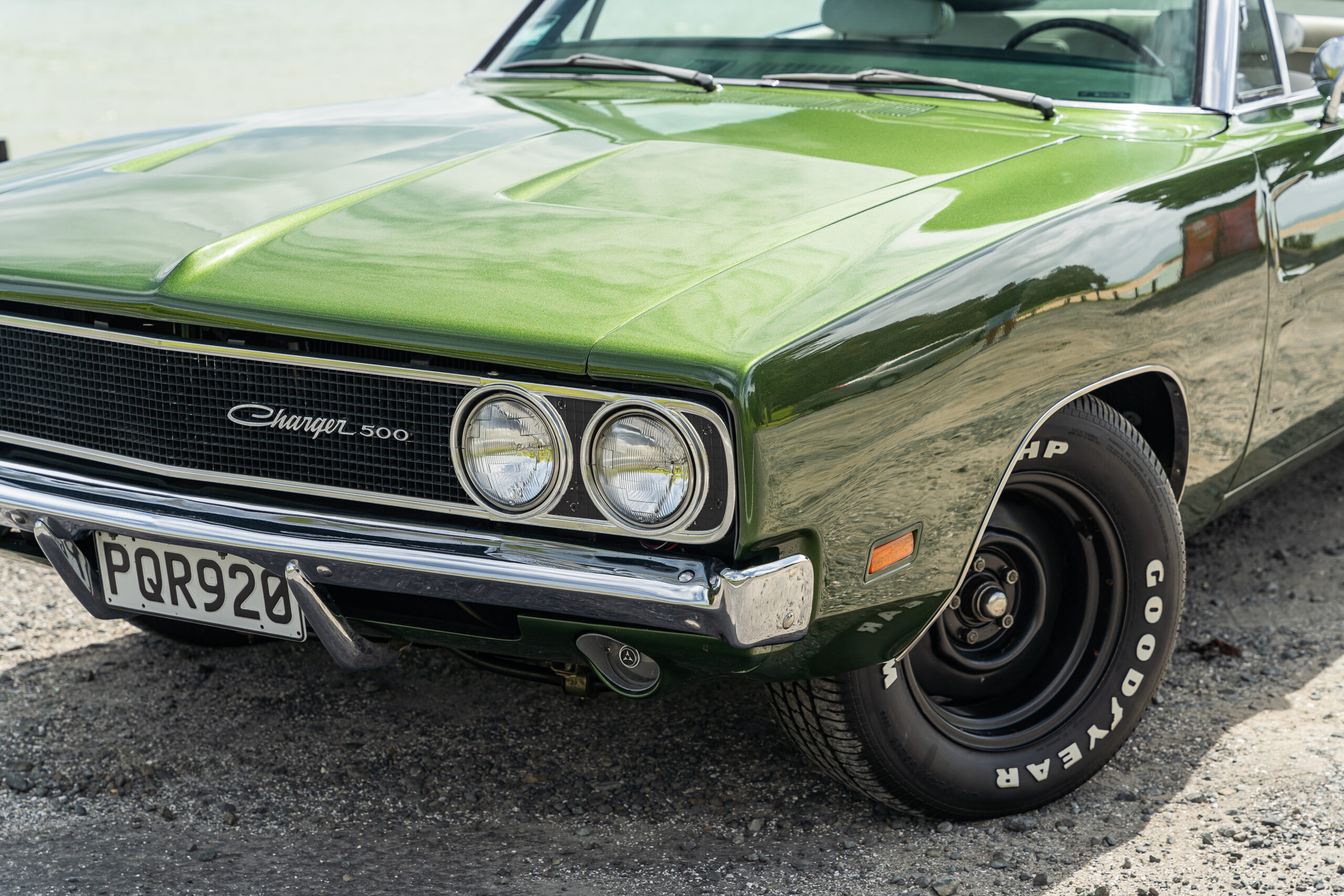
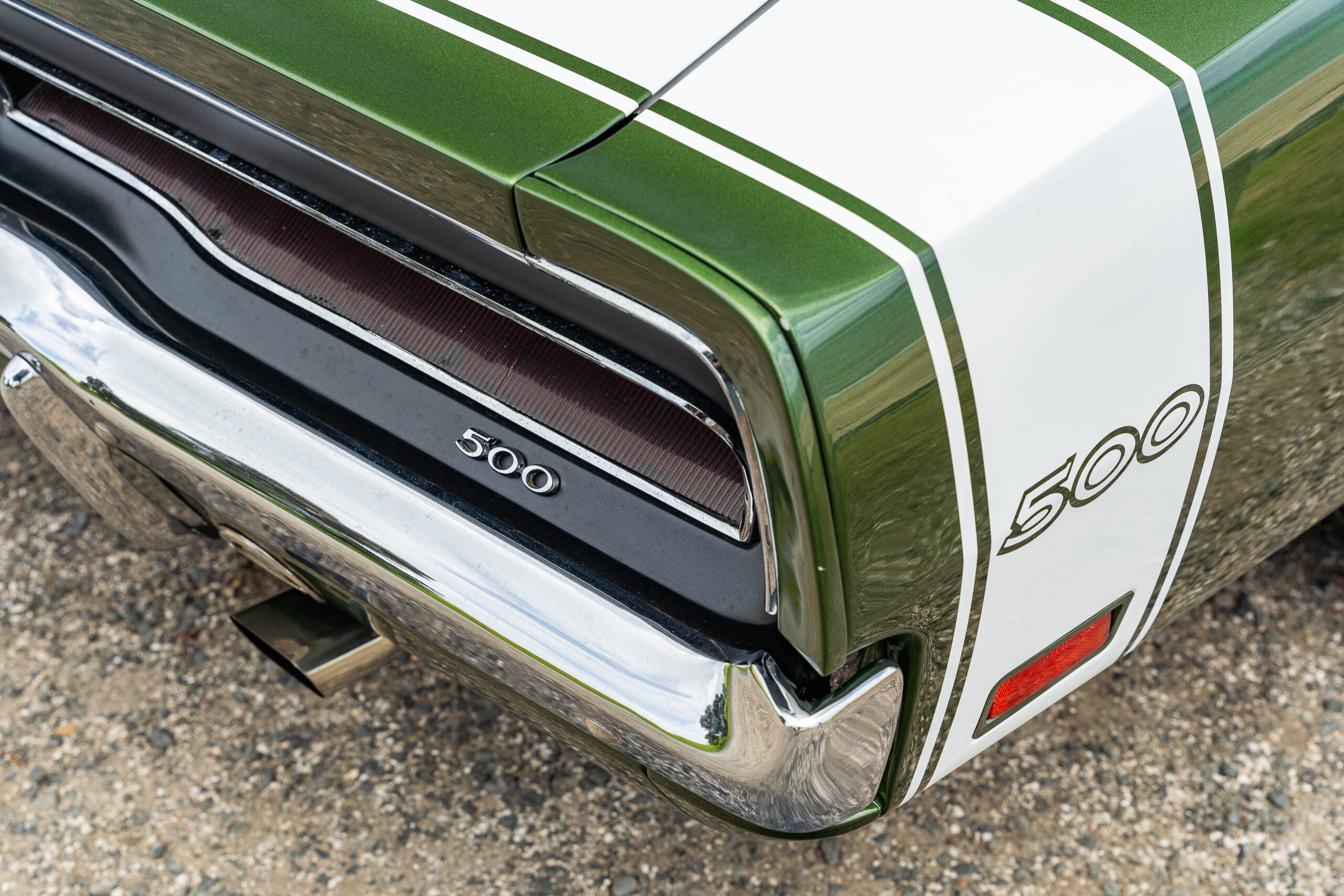
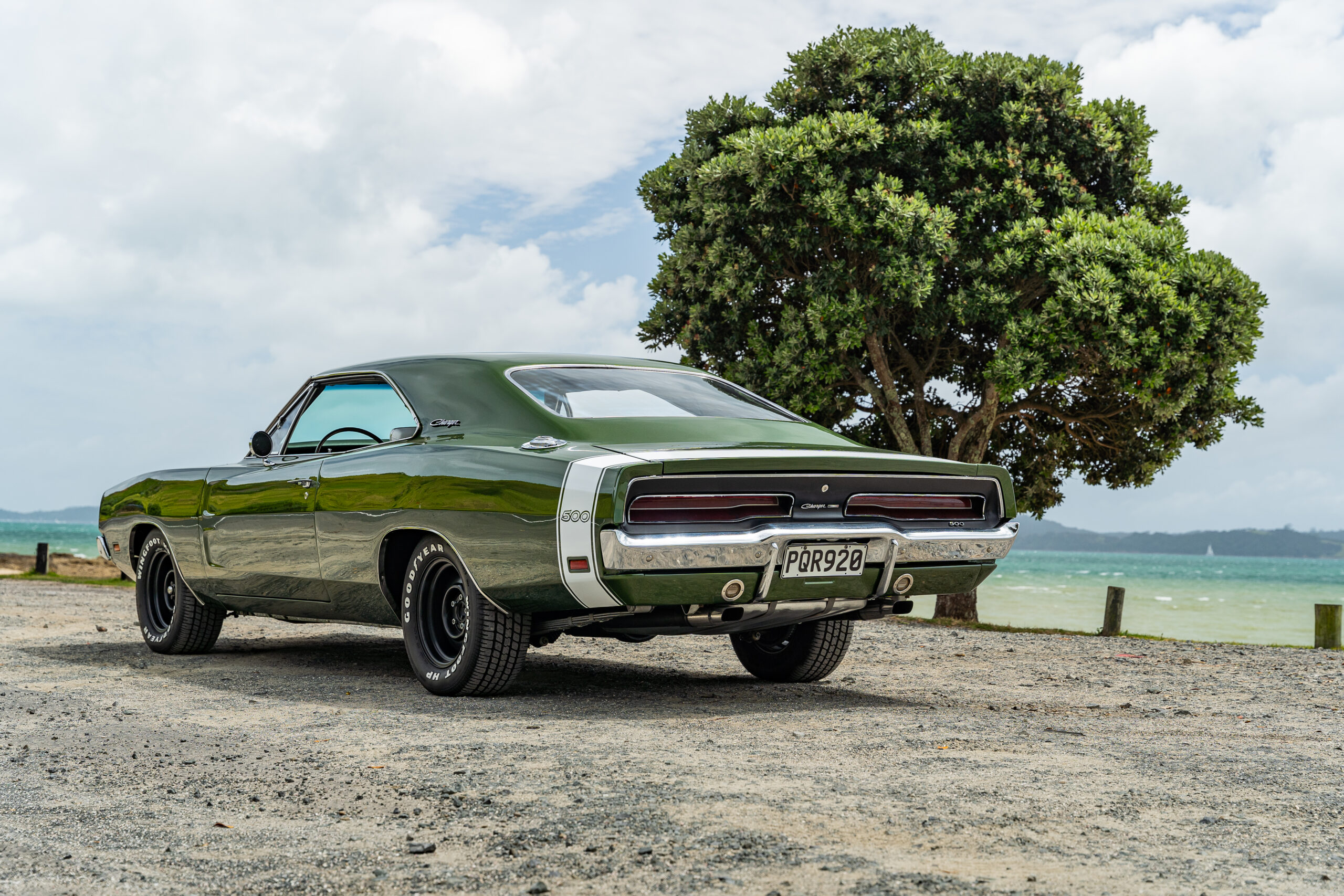
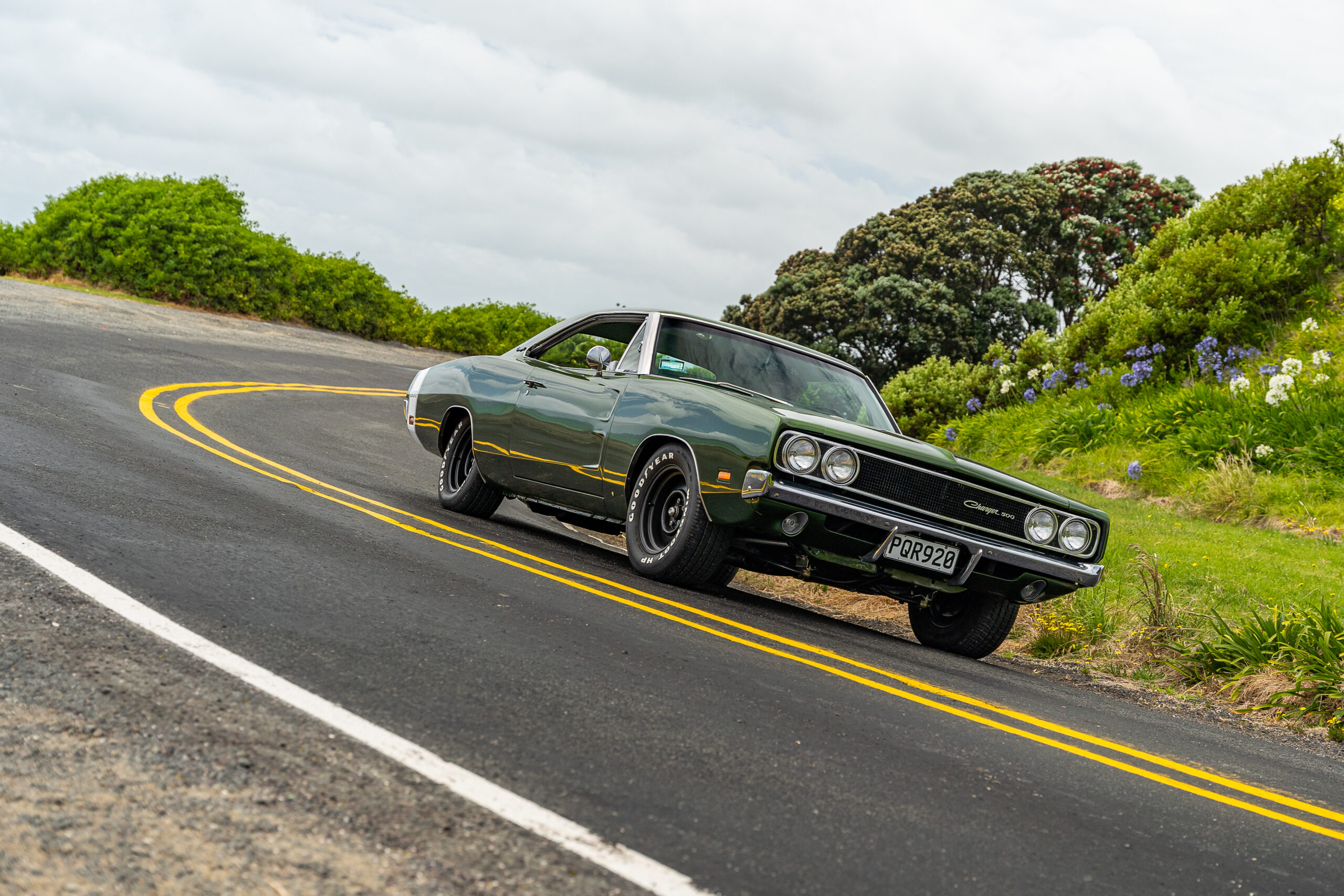
In 1968, Dodge had recently updated their Charger to the second-generation ‘Coke bottle’–shape body that has since become ultra-famous. They found, however, that due to the stylish recessed front grille and new ‘flying-buttress’ rear window design, the body wasn’t doing them any aerodynamic favours on the 300kph Superspeedway tracks. With the ‘Win on Sunday, sell on Monday’ effect being so powerful at the time, they decided to put some effort into improving their poor performance. Chrysler aerodynamicists found that the rear window design of the latest Charger ended up generating a vacuum, causing a tremendous amount of drag, while the front grille with its headlight covers practically acted as an air-brake. So they worked towards improving this design … Firstly, they revised the front headlight and grille section, essentially taking it from a 1968 Dodge Coronet. Bringing this surface all the way forward to create a flush front end improved the Charger’s top speed, and resulted in this unmistakable look. Next, they improved the aero on the A pillars, devising a sleek stainless cover to help reduce drag as well. The final change made was to the rear window, redesigning it to be flush with the C pillars, which would turn out to be a very subtle but effective tweak — essentially eliminating the vacuum and the drag it caused.
Once they had a mockup ready, they contacted the Chrysler Space Division, which was using a wind tunnel in Alabama for development with NASA. At this tunnel, they successfully tested a scale model of the design, but for full-sized testing, they had to travel to the Lockheed Marietta wind tunnel in Georgia. Because it wasn’t equipped for automotive testing at this point, the car had to be expertly craned in through the ceiling at a 45-degree angle — you’ve got to admire the commitment! In this era, none of the American automakers had wind tunnels, so this was a groundbreaking development in what would become the very start of the famed NASCAR ‘Aero Wars’, resulting in the development of other legendary aero-influenced racers, such as the Ford Torino Talladega, Mercury Cyclone Spoiler II, the Dodge Charger Daytona and the Plymouth Superbird.
Finding these adjustments to be effective, Dodge now set their sights towards satisfying the NASCAR homologation requirements so that they could race with this setup. Every ’69 Charger 500, just like the genuine one you see here, started its life as a ’69 Charger R/T built in Hamtramck, Michigan. They came with standard performance options such as heavy-duty suspension, uprated brakes, and either the 440ci Magnum or the 426ci Hemi. (Out of the commonly quoted ‘392’ Charger 500s made, it stands that only 67 of them had the Hemi engine; with only 27 of those being rocking horse-level four-speed manuals.) From Hamtramck, these R/Ts travelled over to Creative Industries Inc., Detroit, for their aero modifications. Production continued up until December 1968 and was conducted by the same skunkworks workshop that would also be responsible for modifying the 1969 Dodge Charger Daytonas.
The racing season for the Charger 500 was unfortunately, but not surprisingly met with an equally developed Ford effort, in the homologated Torino Talladega. The Charger 500 did reasonably in 1969, winning a generous helping of races on the short tracks, and improving Dodge’s efforts over 1968 — but the Fords did slightly better, taking out the constructors’ and drivers’ championships that year. However, Dodge’s frustration led to the breakthrough development of the Charger Daytona, which Bobby Isaac ended up taking to a championship victory in 1970.
It’s a combination of the historical significance, the wild story, and utter rarity of the Charger 500 that drew Duncan into this car. He’d kept an eye out for one of these models for a while, after owning multiple other ‘68 Chargers, and he finally found the perfect one to buy in 2008. There was a busy forum thread discussing a car on Craigslist in Arizona, with somebody asking the local community if they knew the car. They explained that they’d had a full check done on the car, and the responses on the forum were all positive regarding its credibility. Duncan kept an eye on that thread, and he found that the buyer had failed to come up with the funds in the end … This was his perfect moment to pounce, so he called the owner through Craigslist, asked a few questions to see if the owner had answers consistent with the forum information, and when everything came back good, he bought it sight unseen. It was then quickly on its way to the port of Tauranga.
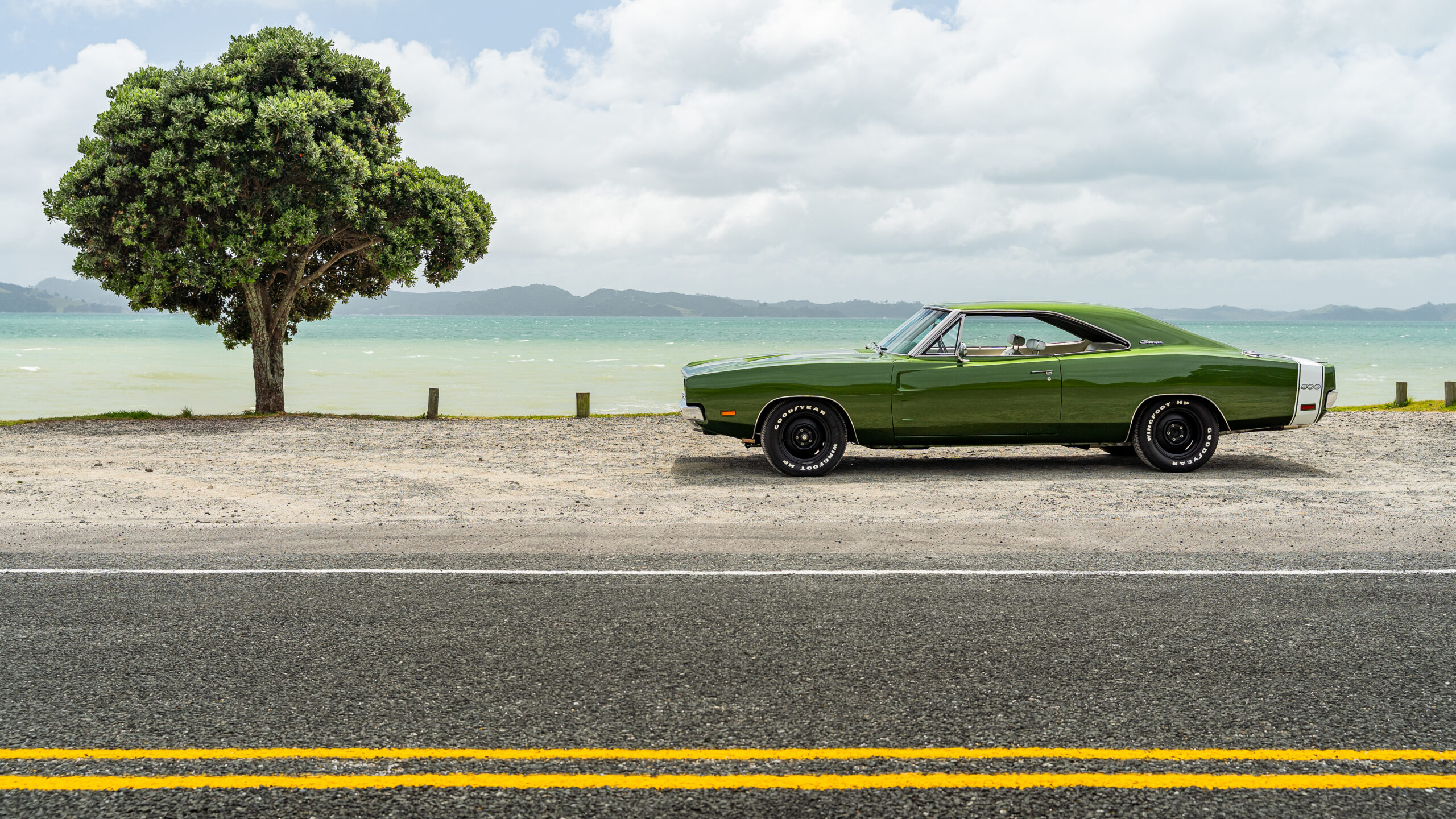
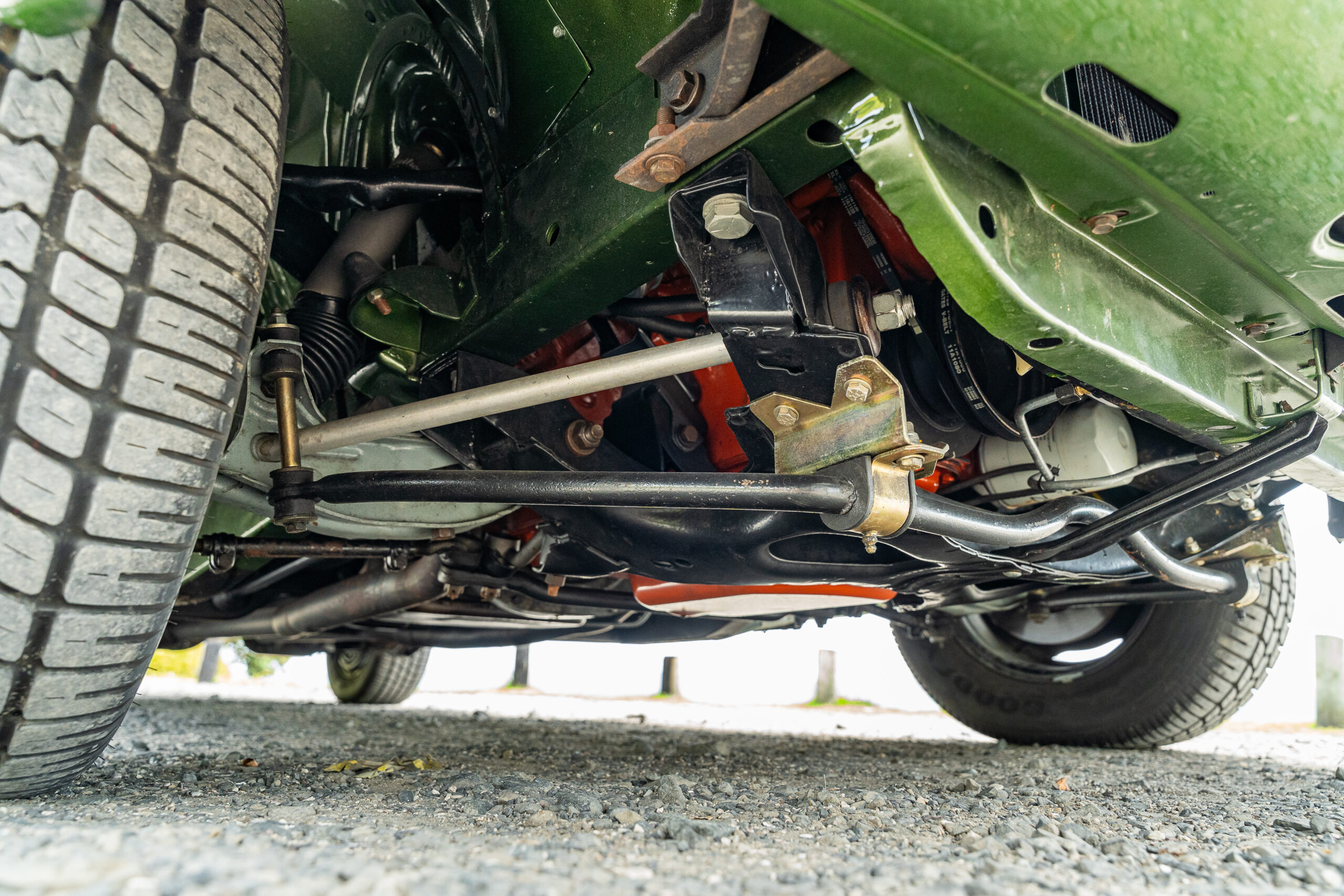
While it was a running and driving genuine ’69 Charger 500 with some documented history, Duncan knew it was far from perfect. On its landing in NZ, he then began what would become an on and off build that lasted the better part of 15 years — but what he’s ended up with now is an incredibly immaculate nut-and-bolt restored, future-proofed piece of automotive history. Everything has been refreshed to a top level, starting with an extensive catalogue of AMD steel panels being expertly grafted onto the car, then sand-blasted and soda-blasted, and finally rust-proofed to a better-than-’60s standard, and painted in the original F8 Dark Green Metallic. The ‘unobtanium’ rear window has even been removed along with its steel plug, further rust-protected, and refitted for freshness. Every part of the underbody has been revitalised, including the chassis, subframe, suspension bushes, leaf springs, torsion bars and brakes. It’s just uncanny how in-depth Duncan and everybody who’s helped him have gone for this restoration.
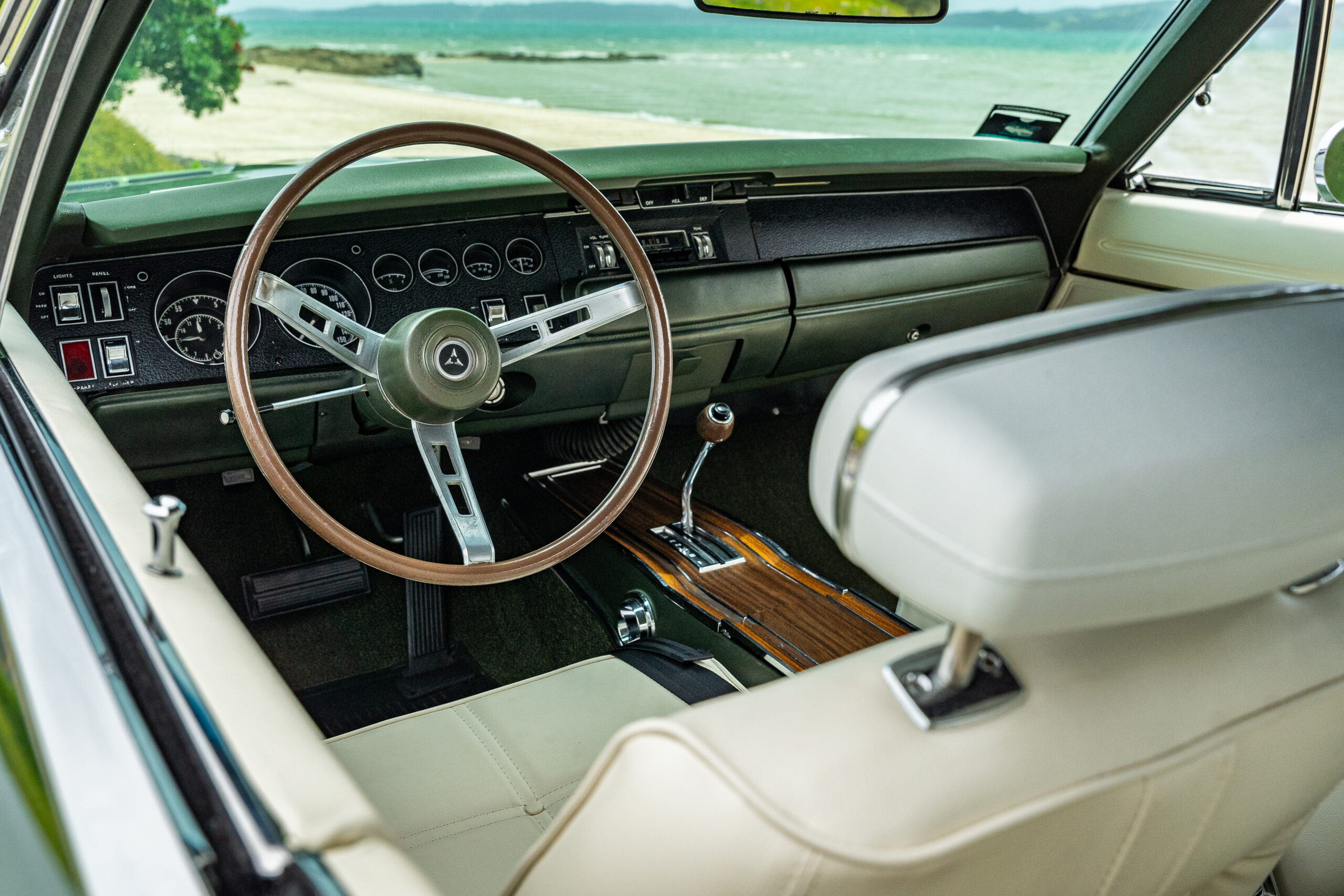
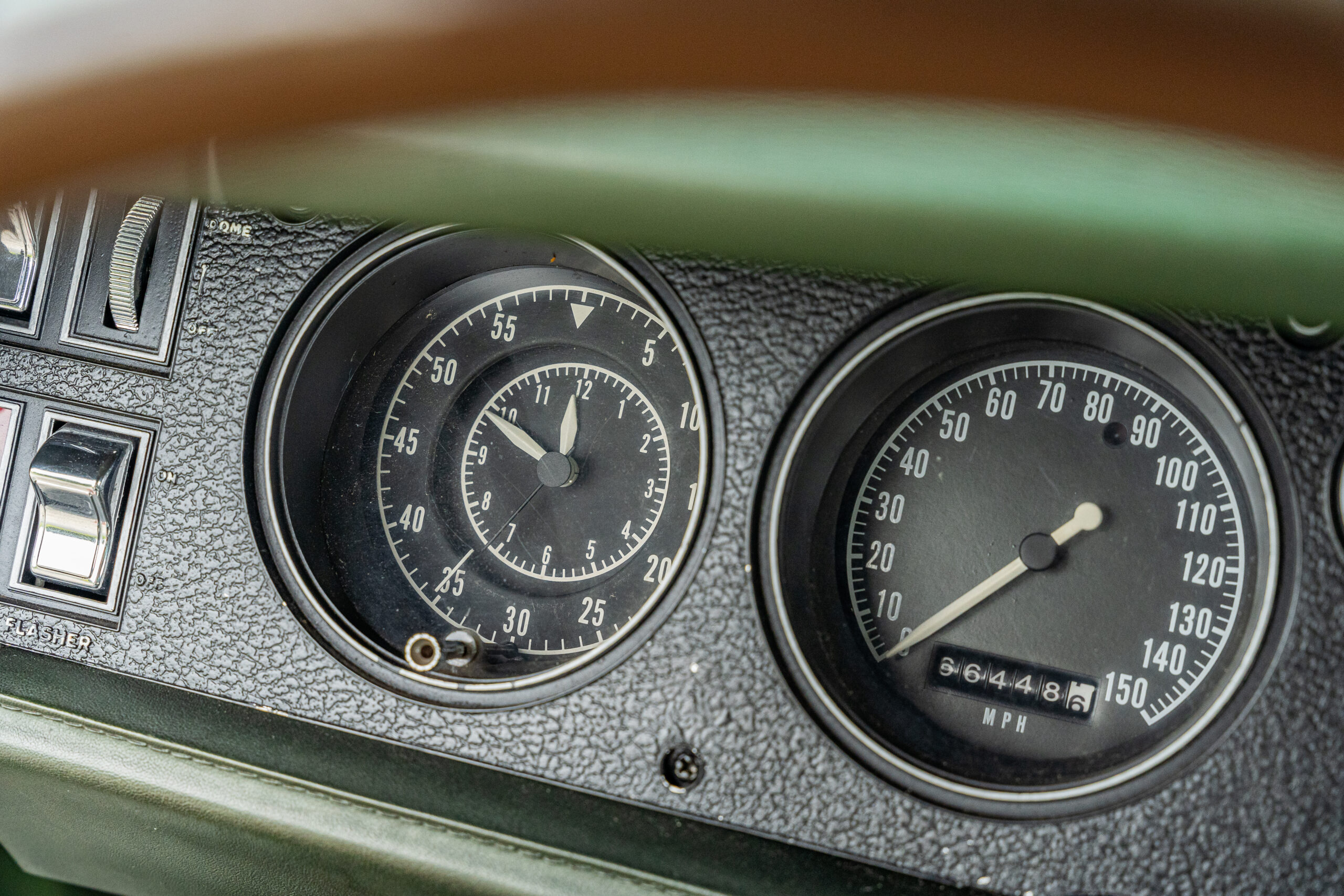
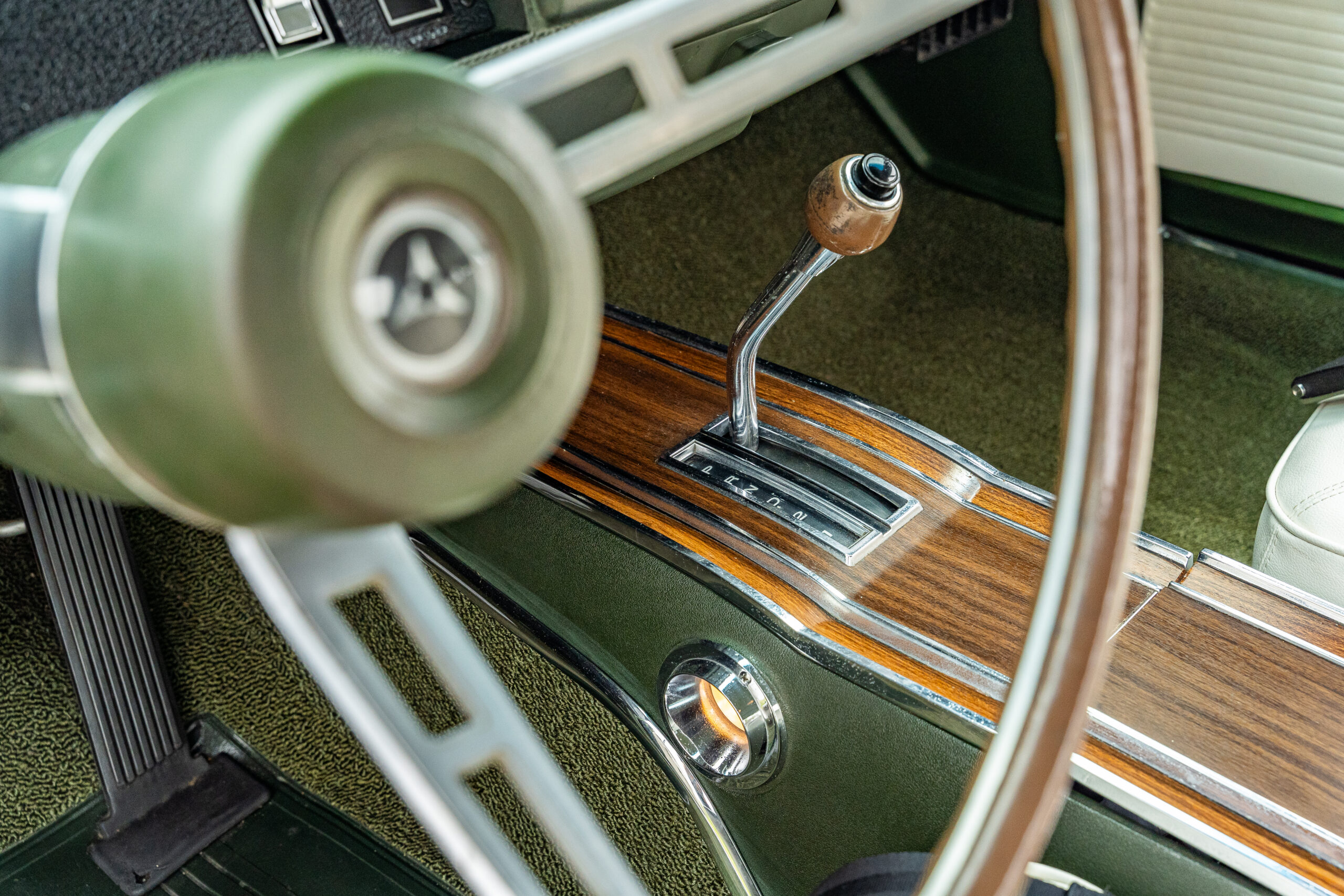
While he had the chance, Duncan chose to convert the interior from a great-at-the-time fully green interior to a more balanced, timeless mix of green dash and white upholstery, matching the car’s white tail stripe. The dash and gauges were restored, while the odd thing such as the wooden steering wheel didn’t need too much fixing up. A completely new interior kit was purchased at Legendary Auto Interiors, and it really looks sharp, with a fair bit of local upholstery work going into the seats. An interesting thing to note about the Charger 500 is that you can see the frame imprint for where the standard Charger’s rear window would typically go, through the C-pillar fabric lining.
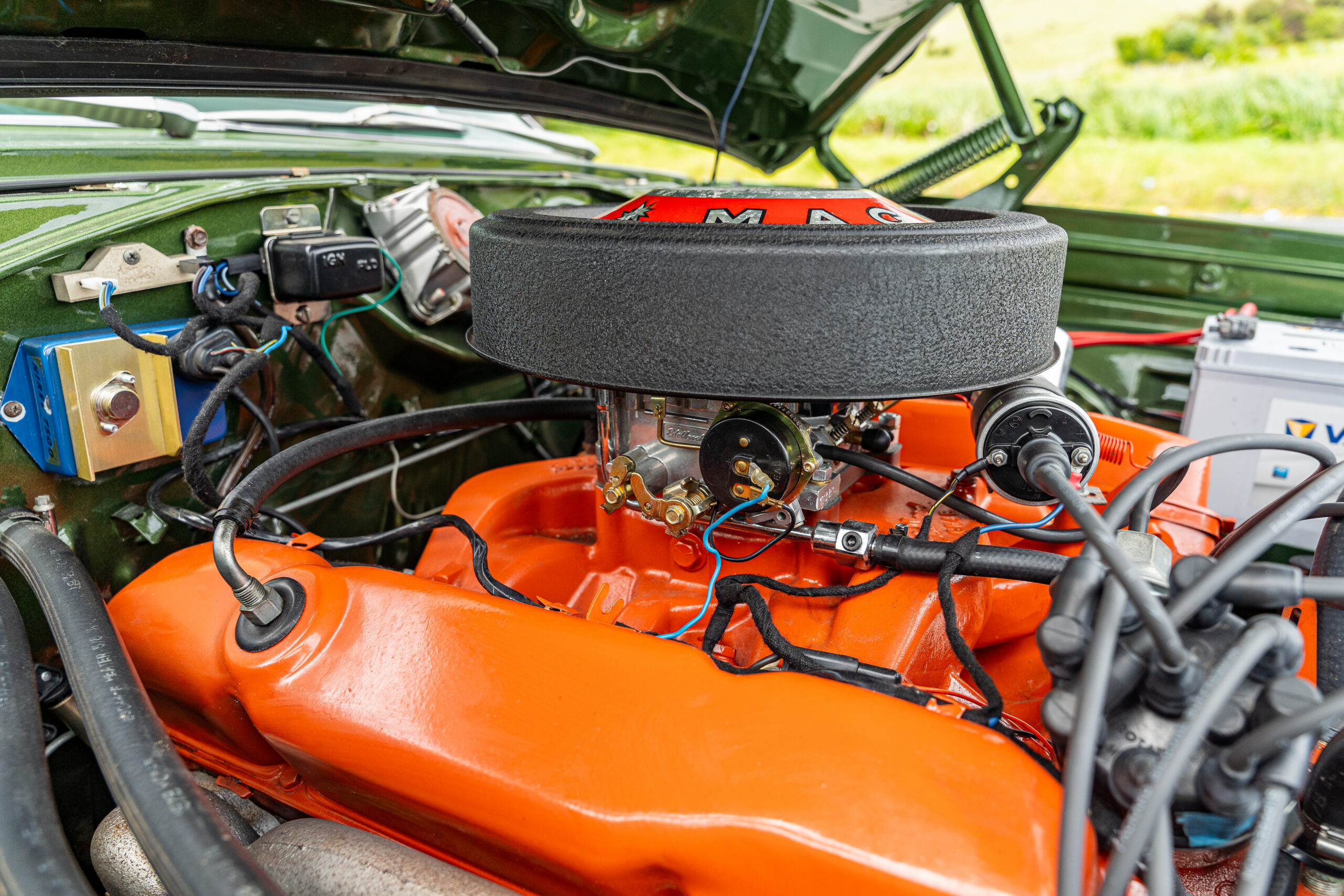
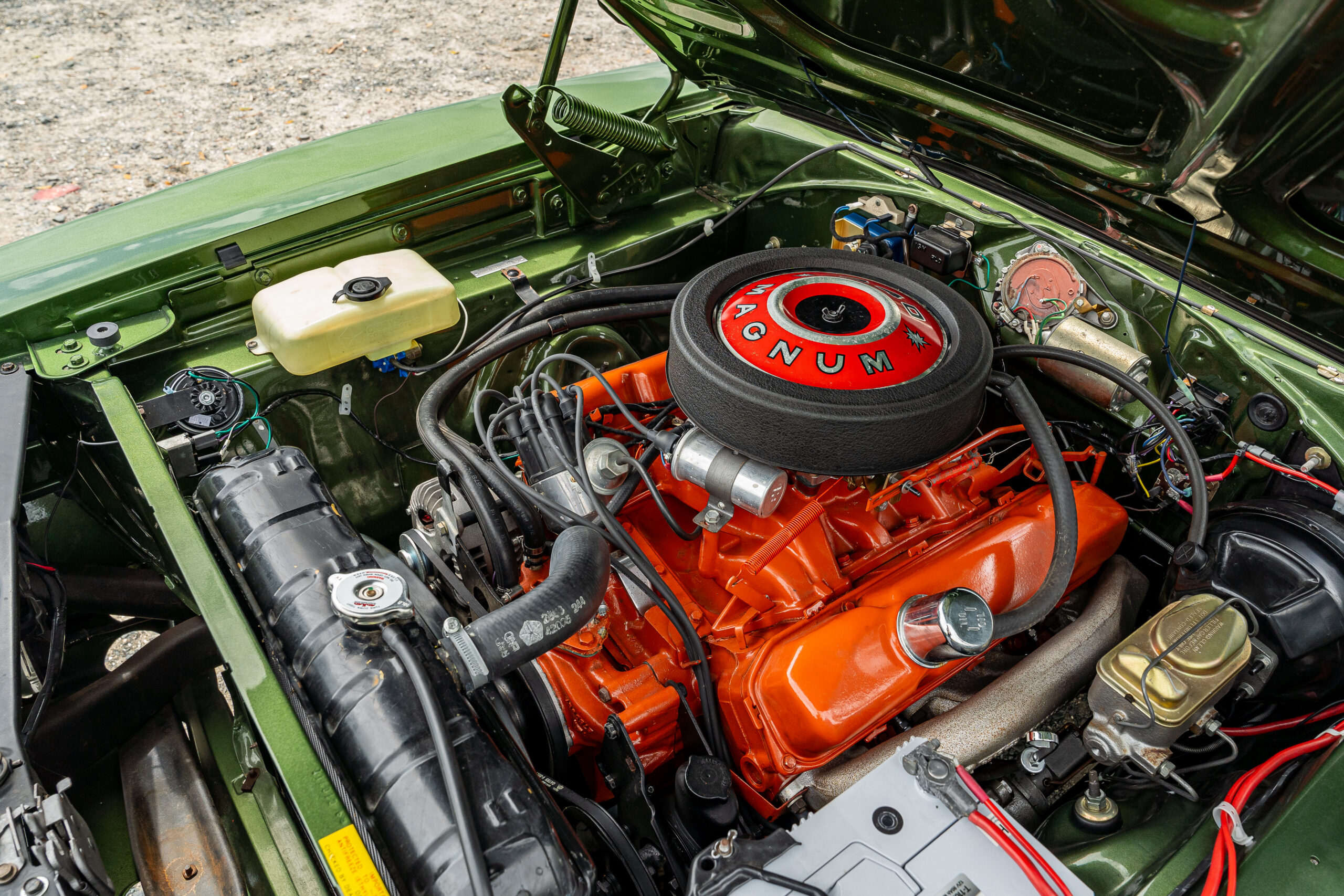
The engine, of course, is a highlight on this car, with Duncan taking care to make sure it all looks incredibly original, but still going ahead and hotting things up internally. He had it bored out, had it internally balanced, ported and polished the ‘Stealth’ aluminium heads, and then filled them with all sorts of goodies. He’s fitted a few other sneaky sleeper parts to it too, including a classic and sought-after dual-plane aluminium CH4B intake, and ‘HP’ cast iron exhaust manifolds, with the air cleaner doing a good job of hiding the Edelbrock AVS2 800cfm carb. All together, it really gets up and goes, with roughly 500hp travelling to the wheels. The rebuilt and sharpened-up TorqueFlite 727 does a great job of plucking through gears quickly, and the Suregrip 8-¾-inch diff makes sure that you’re spinning both wheels at once.
What Duncan has done here is achieve a lifelong dream of his, likely shared by many. To own a holy grail Dodge Charger and have it built exactly to his standard, it would be a pretty special thing to get behind the wheel of. You can tell that he’s absolutely full of passion for these cars, and he isn’t precious about getting out there and driving it properly, so we’d be happy to go out on a limb and say that this incredibly special Mopar has fallen into the best hands possible.
OWNER Q&A
DRIVER: Duncan Stewart
AGE: 49
OCCUPATION: Company Director
PREVIOUSLY OWNED CARS: Two 1968 Dodge Chargers, and currently own a 1977 Dodge Monaco ex-California Highway Patrol cruiser
DREAM CAR: This is it. I enjoy all brands of classic American Muscle cars from the ’50s to the ’70s, but in my opinion, the shape of the ‘Coke bottle’ styling of the ’68–’70 Chargers was Muscle-car styling at its finest. The aggressive stance, the scalloped doors and hood and the great lines make the Charger one of the most iconic American muscle cars of all time
WHY THIS CAR? Because I love the Charger, and the rarity plus NASCAR history of the Charger 500 makes it stand out to me
BUILD TIME: On and off since 2008, first NZ registration in 2022
LENGTH OF OWNERSHIP: 18 years
TREV THANKS: Kelvin Jackson, Michael Stewart, Steve Delve, Colin McLean, Doug Schellinger, Raewyn Jenkins, Manfred Unger, Richard Howe, Barry Clark and Dick Tevich
SPEC LIST
VEHICLE: 1969 Dodge Charger 500
ENGINE: Numbers-matching 440ci Magnum bored to 446ci, SRP forged pistons, ARP rod bolts, crank grind, rotating assembly balanced, 440 Source ‘Stealth’ Aluminium heads, Crower Hydraulic flat tappet 271 cam, Hy-Lift Johnson lifters, ARP push-rods, COMP Cams 1.5 ratio Ultra Pro roller rocker arms, COMP Cams single outer valve springs, mild street port and polish, Rollmaster timing chain, 440 Source Harmonic Balancer, classic Edelbrock CH4B dual plane aluminium intake, Edelbrock AVS2 800cfm carb, Carter mechanical fuel pump, Mopar Hi-Rev 7500 ignition, FireCore distributor and ignition leads, factory ‘HP’ cast iron exhaust manifolds, Flowmaster 50 series mufflers with 2.5-inch pipes, factory exhaust tips, Melling oil pump, Hemi six-quart oil pan, FlowKooler Hi-Flow water pump, US Radiator four-core high-efficiency copper radiator, DynaTech MityMounts engine mounts, new fuel tank
DRIVELINE: Numbers-matching three-speed 727 Torqueflite automatic, fully rebuilt with shift kit, rebuilt torque converter, 8-¾-inch Suregrip diff, 3.23 gears, original driveshaft balanced
SUSPENSION: Mopar Performance 1.03” heavy-duty torsion Bars, aluminium strut rods, heavy-duty 1-⅛-inch front sway bar, rebuilt original rear leaf springs, Edelbrock IAS shocks, MOOG ball joints and tie rod ends, Energy Suspension rubbers, bushes, and mounts
BRAKES: Dual diaphragm Bendix booster, Bendix master cylinder, SSBC-USA front discs, four-piston front callipers, new brake lines, factory 11-inch heavy-duty rear drums
WHEELS/TYRES: 15×7-inch Chrysler factory steel ‘Wheel Vintiques’ reproductions, Goodyear Wingfoot HP 245/60R15 front and rear tyres, original set of restored 14” Chrysler steel show wheels in F8 green, reproduction F70-14 Redline tyres
EXTERIOR: New front guards, hood, trunk pan, trunk extensions, full quarters, Factory F8 ‘Dark Green Poly’, PPG Deltron, new weatherstripping kit and rubbers, factory passenger side wing mirror, new front windshield, rear window plug removed, cleaned, and re-fitted, rotisserie restored nut and bolt bare metal restoration
CHASSIS: American Autowire full-replacement wiring harness
INTERIOR: Original woodgrain steering wheel, Firm Feel rebuilt steering box and steering column, restored gauge cluster, new decals, new quartz clock, restored seat rails, new seat foam and upholstery, Legendary Auto Interiors headliner, package tray, seat covers, upper door pads, door panels, carpet, kick panels, sun visors, head rests, seat hinge covers, seat belts, and arm rests, Dynamat floor deadening, factory rear windscreen defogger, dash frame restored and painted the correct ‘suede’ green, trunk-mounted bumper jack
PERFORMANCE: 500hp
This article originally appeared in NZV8 issue 232